Home
Costa Rica Semester - TROPICAL BIOLOGY ON A CHANGING PLANET Print
Program in Costa Rica, Fall & Spring
Spring 2013: Jan 28 - May 14
Fall 2013: August 26 – December 10
OTS Undergraduate Brochure ( PDF document 2.17 mb )

Apply Now!

Resident Faculty:
Mauricio Garcia, MSc.
Erika Deinert, Ph.D
Pablo Riba, M.Sc.

Syllabi ( PDF document 405 kb ) 

• Fall 2013 Orientation Materials
( PDF document 5.13 Mb)

• Spring 2013 Orientation Materials
( PDF document 5.3 Mb )

FAQ's ( PDF document 573 kb )

• See research reports of program alumni: Coursebooks 

Application Deadline:
Spring Semester: DUE NOV. 1
Fall Semester: DUE MAY 1

OTS selects participants on a rolling admissions basis.  Please apply early to be considered.  Applications will be accepted until courses are filled.

See these Notes from the Field from a current or recent semester:
News from the Field Las Cruces Fall 2011
News from the field Cuerici Fall 2011
News from the Field Monteverde/Palo Verde Fall 2011

Organization for Tropical Studies
Duke University
Box 90630
Durham, NC 27708-0033
Phone: (919) 684-5155
Fax: (919) 684-5661
Email:otsadmissions @ duke.edu

Join a fully mobile Tropical Biology Semester Program in Costa Rica!  Live and work at 6 different field stations, in 6 different ecosystems throughout the country.  Fall and Spring semester programs sponsored by Duke University and the Organization for Tropical Studies (OTS) provide students with an in-depth understanding of ecology, complemented by a strong foundation in the social, political, economic, and scientific aspects of resource management and conservation.

The semester program, designed for biology and environmental science majors, but open to students from all disciplines, represents a unique opportunity to learn about the inner workings of field ecology under the direct guidance of experienced ecologists.  Students will also learn about the conservation of tropical ecosystems through a series of field-based case studies with ecologists and local stakeholders, and improve their Spanish with a homestay and intensive language instruction. Our programs are academically rigorous and participatory, employing a combination of field and classroom instruction, hands-on research, and cultural exchange that allows students to broaden their academic and personal horizons.

In this Tropical Biology semester in Costa Rica students have an opportunity to work with a variety of resident and invited professors to develop both faculty-directed and independent research projects.  In addition, the program invites numerous national and international biologists to participate by giving lectures, leading field trips, and sharing their expertise in tropical biology.  At each site the course also draws on the knowledge and experiences of local farmers, reserve owners and community groups to provide a down-to-earth and personal perspective on conservation policy and practices.


Program Description

Students in the program are enrolled in the following courses and receive the equivalent of four semester hours for each course.

Fundamentals of Tropical Biology (BIO 280A)

The diversity and ecological complexity of the tropics has fascinated ecologists for centuries. Understanding the ecological processes of tropical forests has greatly furthered our understanding of ecosystem-level and population-level dynamics not just of tropical communities, but of communities in general.  Research in tropical ecology has and is making major contributions in many areas.  Current discussions of the importance of biotic vs. abiotic processes in driving speciation and community assembly center on tropical forest systems.  Studies of tropical systems have also challenged long held beliefs on the nature of mutualisms, the impact of forest fragmentation on biodiversity, global nutrient cycling, and other ecological processes.

So why study tropical ecology in the tropics?  To experience incredible diversity first hand, to enjoy watching monkeys while you are eating breakfast, and to learn about current topics in ecology through the eyes of tropical biologists, of course!  In addition, as the conservation of our tropical forests is of global concern, an understanding of tropical diversity and ecology will help you understand how organisms and their interactions are impacted by different conservation strategies.

By living and working in a variety of habitats throughout the semester, you learn about the fundamental principles and current “hot topics” of tropical biology, as well as about the natural history of local plants and animals.  To take advantage of Costa Rica’s diversity, the course is fully mobile. For periods of 5 days to 3 weeks you live at the three OTS field stations, as well as at sites in Monteverde, the Cerro de la Muerte area, and Cabo Blanco National Park.  Students are introduced to a great variety of habitats, including several dramatically different types of forest (e.g., montane cloud forest, seasonally dry forest, lowland wet forest, mangroves, wetlands, and high elevation Páramo), as well as to tropical marine systems.  Field orientation at each site includes the taxonomy and ecology of characteristic plant and animal species.  These activities also serve to stimulate questions that students may address in subsequent independent research projects.

Environmental Science and Policy of the Tropics (ENV 282A)

Incorporating case studies from the challenges and achievements of conservation efforts in the diverse ecosystems of Costa Rica, this course blends global with local perspectives in order to identify and understand issues at the human-environment interface in developing tropical countries.

Field and classroom activities cover a variety of topics, including habitat degradation and fragmentation, reserve design and management, national parks and conservation areas, agroecosystems, biological prospecting, ethnobiology, restoration ecology and more.  Several themes run throughout the course, including global climate change, land use history, sustainable development, ecotourism, people vs. parks, and the pros and cons of integrating local communities into environmental management strategies.

Visits to banana and sugar cane plantations, managed wetlands, forest fragments, small farms, private reserves and public parks highlight major conceptual themes as well as the practical challenges faced by Costa Rica and other Neotropical countries at social, political and economic levels.

Field Research in Tropical Biology (BIO 281LA)

This course introduces you to research design, field methods, and basic data analysis in a tropical context. Hypothesis testing and statistical analysis, including orientation to basic software packages, are emphasized in the course. Students participate in faculty-led field projects which require working together in small groups.  Students also design, implement, and analyze their own field projects.  The course takes an iterative approach to teaching research design.  Rather than working on one or two long projects, students participate in multiple shorter projects.  While learning to ask and answer scientific questions, students also learn about the ecology of the organisms on which they work.

In faculty-guided field problems, resident and visiting faculty select questions and guide the students through the process of identifying hypotheses, designing field experiments, and interpreting data.  Projects illustrate particular concepts of general interest to tropical field ecology and are of brief duration (2 days).  These group projects also give students an opportunity to learn about professional collaboration, and to work together gathering and analyzing data.  A small subset of students will be responsible for writing up one faculty led project during the semester.  These students work closely with the leading faculty in project design, implementation, interpretation, and the presentation of results.   Faculty led projects are presented orally in the format of a scientific presentation and also as a written report.

 Students also complete 2 independent research projects.  Students work either individually or in groups of up to 4 people to choose a question, develop hypotheses and design and implement the study.  Like the faculty-led projects, the independent project is presented both orally and as a written scientific paper.  For both independent projects, faculty provides close mentoring throughout the process of experimental design, implementation, and analysis.  Students present research proposals to faculty for approval and then meet regularly with an assigned faculty mentor to give updates and seek advice.  Faculty read first drafts of the resulting papers and students make revisions for the final write-up.

Students also participate in discussions of the ethical issues that often surround scientific research in general, and field research in the tropics in particular. 

Culture and Language in Costa Rica (SP 92A)

In the middle of the program, students go back to San Jose where they attend formal classes up to five hours a day for two and half weeks and live with a Costa Rican family. The chief goals are to expand vocabulary and conversational skills, strengthen grammar, and introduce key social, cultural, and environmental issues in Costa Rica. The curriculum consists of dynamic classroom discussions, supplemented by listening, writing and reading exercises.

Go to top

Instructors

OTS and Duke University take great pride in the experience and expertise of our teaching staff for the Undergraduate Semester Abroad Program. All of our faculty are active tropical biologists and dedicated teachers. For more information, please visit the Faculty Staff in Costa Rica.

Prerequisites 

You must have completed at least one year of college-level biology and preferably one year of college-level Spanish or the equivalent by the start of the semester. Students who do not meet the language requirement should contact the Enrollment Management Team for suggestions regarding programs for additional Spanish language training prior to the program start date.

Go to top

Sites Visited

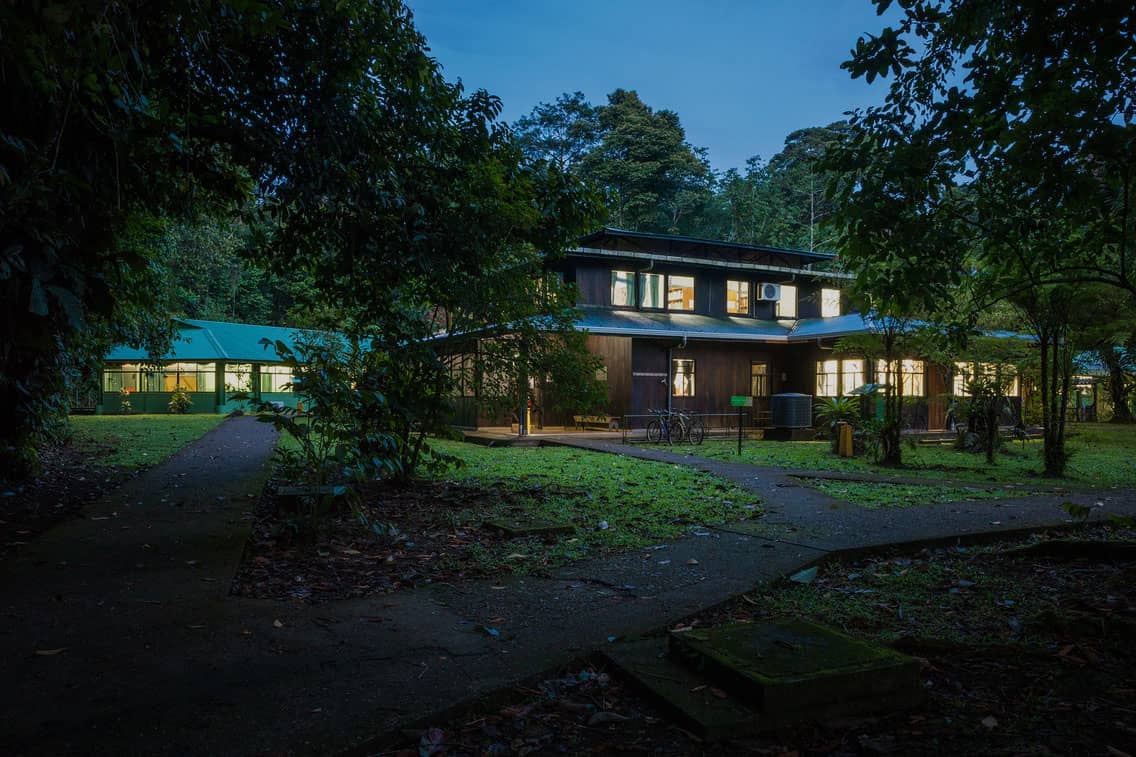
Every semester, we visit 6 biological stations located in national parks and private reserves, in order to explore both the diversity of tropical ecosystems as well as different approaches to natural resource management.  OTS's La Selva Biological Station, located in lowland tropical forest on the Atlantic slope, is an internationally renowned research center and home to thousands of species of flora and fauna.  Here we explore the inner workings of "classic" tropical rain forests.  The nearby Dole and Chiquita banana plantations allow us to delve into issues related to multinational corporation management of  agriculture, and the impacts of agroecosystems on intact forests. 

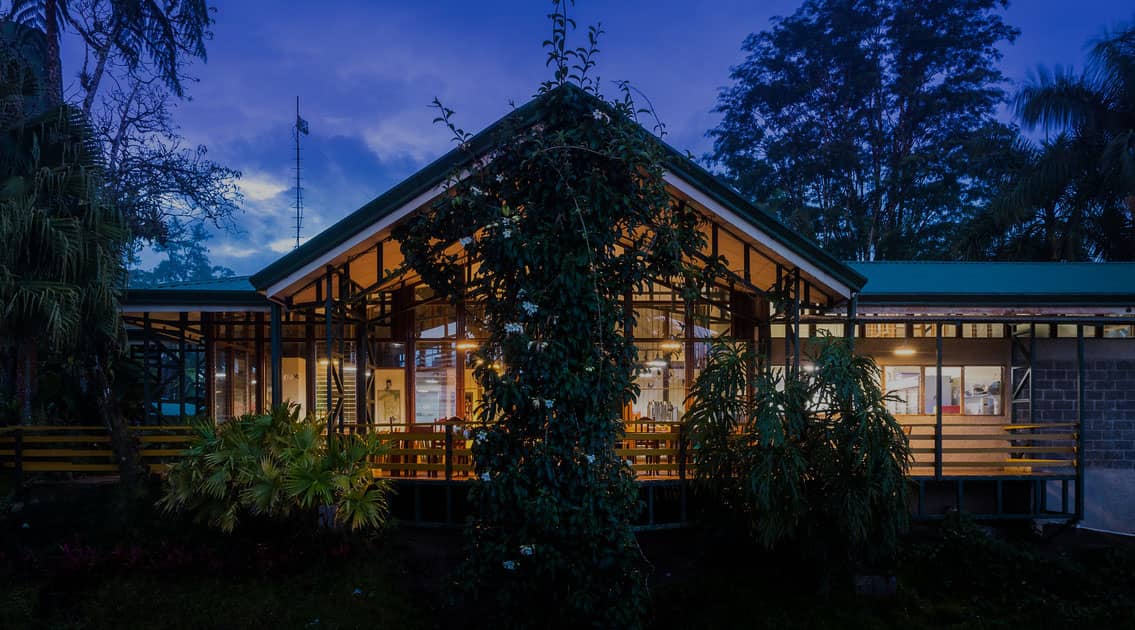
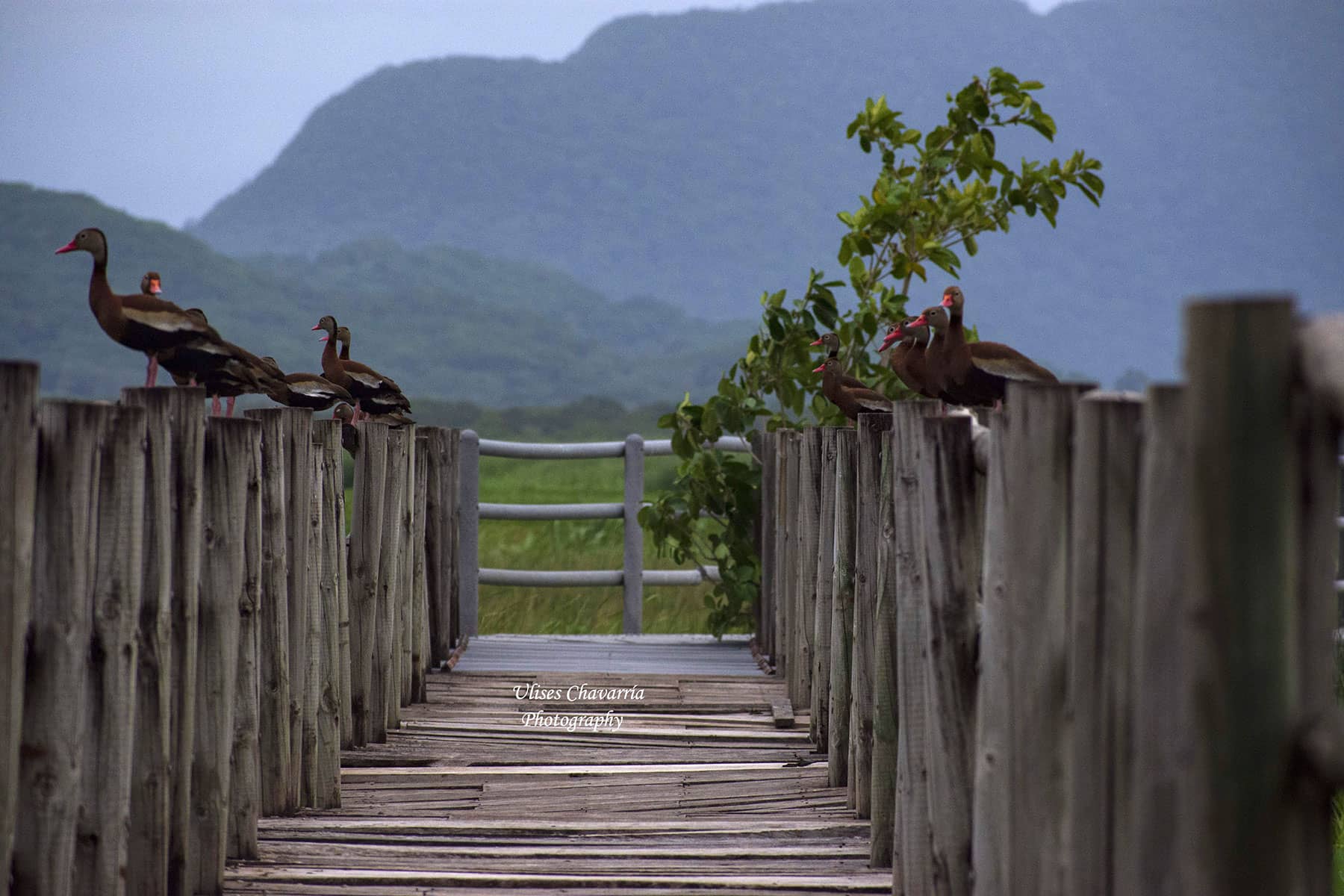
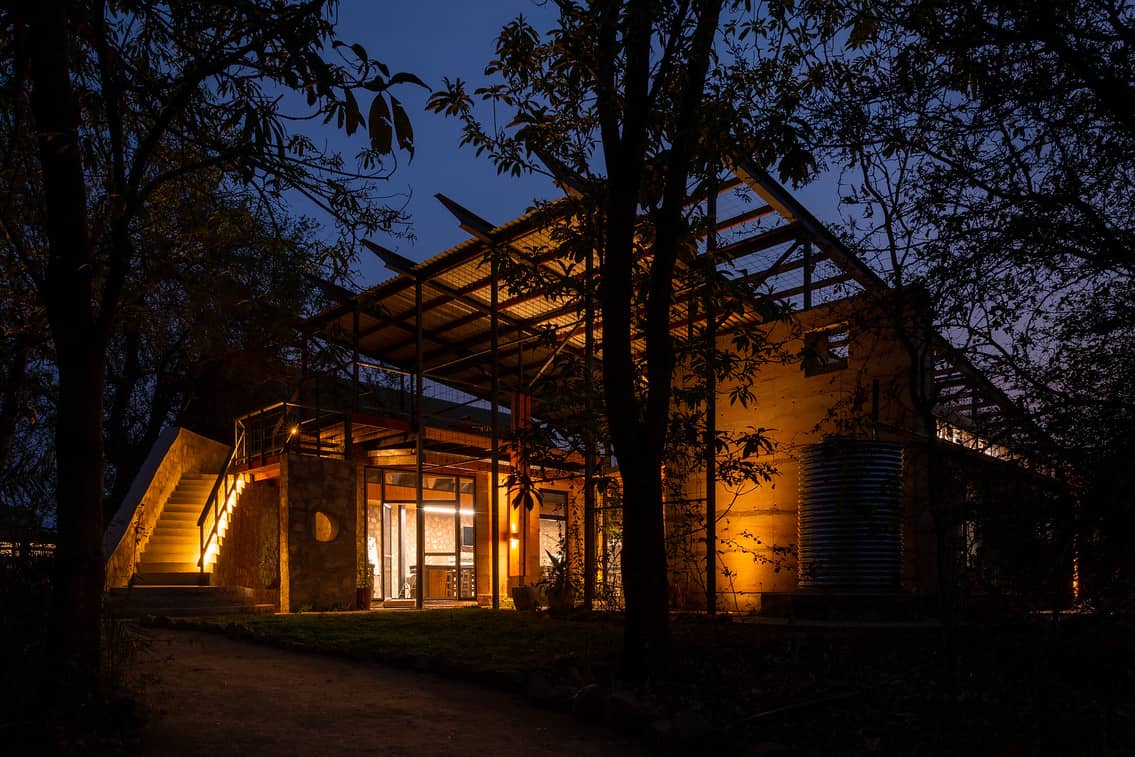
OTS's Las Cruces Biological Station, located in cool mid-elevation forest on the Pacific slope, houses Costa Rica?s premier botanical garden with the richest plant collection in Central America.  Las Cruces is surrounded by a fragmented landscape of cattle pasture and coffee plantations, and thus not surprisingly, is the site of multiple research projects focusing on restoration ecology and fragmentation biology.  OTS's Palo Verde Biological Station, located in seasonally dry forest of northwest Costa Rica, provides direct access to an extensive RAMSAR wetland that hosts magnificent waterfowl. Palo Verde also is one of the only sites in Central America that protects tropical dry forest, an ecosystem considered by some to be the most endangered ecosystem in the tropics.  Here we explore that unique ecosystem, and also consider in interaction of local communities and national parks.  Palo Verde is one site in the tropics that employs a unique strategy for restoring dry forest: cattle grazing!  We explore both the negative and positive aspects of such a management strategy on the ecosystem, and people-park relations.  Agricultural activities outside of Palo Verde that have historically impacted the park include rice and sugar cane production.  The course also visits Cuerici Biological Station, a remote field station and private trout farm on the edge of the station?s oak forest reserve, and a remote field station in the cloud forest of Monteverde.  In most semesters the course also travels to Cabo Blanco National Park.  Here students have an opportunity to explore the marine ecosystems of the pacific coast by snorkeling and tidepooliing, and to discuss the park's philosophy of having a no-people-allowed area.  If you would like more information on sites to be visited, please contact us.

Undergraduate Program Staff and Faculty

Go to top

Tuition and Program Fees

The 2013-2014 tuition for OTS semester programs is $22,010. In addition, there is an OTS Program Fee of $1,850 per semester. The Program Fee covers room and board. For students from Consortium schools (see the OTS home page for a link to the list of member institutions) OTS will cover this fee through a special scholarship. International travel, independent travel, incidentals, and personal spending are not covered. Non-Duke students will also be charged a $40 lifetime transcript fee. Rates for Fall 2014 will be announced by late May 2014.

Go to top

Financial Aid

  • Scholarships: OTS has funding available for students from ethnic or minority groups underrepresented in the sciences, as well as for Costa Rican students. For more information, please contact the Undergraduate Program Officer. For Non-Duke Students: Please consult with the Financial Aid Office at your institution or contact an OTS Admissions Counselor.
  • For Duke Students: Duke undergraduates who receive need-based financial aid during the academic year may apply their financial aid package to a Duke semester abroad program. For information, please contact the Duke Global Education Office.
Go to top

Travel Arrangements

Upon acceptance to the program, students will receive an orientation packet with detailed information about how to prepare for the program, including sites visited and suggestions on what to bring. All participants should plan to arrive in San José by the evening of the Semester Program start date. Students must have a valid passport and an International Student ID Card in order to participate. For more information, please contact the Admissions Counselor.

Go to top

Schedule of Payments and Deadlines

Students will be informed of their acceptance to the program on a rolling basis. Upon acceptance, a nonrefundable deposit of $1000 is due to confirm a place in the program. Non-Duke students should pay $1,040 (includes a one-time, lifetime transcript fee). Final payment of remaining tuition and fees is due 1 to 2 months prior to the program start date. Detailed payment information, including amounts and due dates, will be provided to students with their acceptance letter.

Go to top

We would like to hear from you! If you have questions about this program or other opportunities with OTS, please contact Admissions Counselor or the Director of Enrollment Management at OTS. Duke students should also contact the Office of Study Abroad at Duke University.

Organization for Tropical Studies
Duke University
Box 90630
Durham, NC 27708-0633
Tel. (919) 684-5155
Fax (919) 684-5661
E-mail: otsadmissions @ duke.edu

All applications will be considered without regard to race, color, national and ethnic origin, disability, sexual orientation or preference, gender, or age. Duke University reserves the right to cancel this program. Should it do so, refunds will be made in accordance with the Duke University Office of Study Abroad policy. Go to top
 
Organization for Tropical Studies
Site powered by Joomla!